
Undercut: Origins and Who It Suits
11.10.2024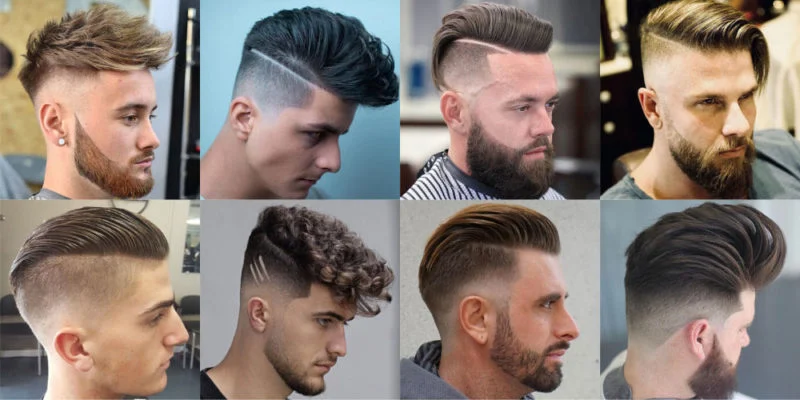
An undercut is contrast pushed to its limit. The sides and back get shaved short, and noticeable length is left on the crown. There’s no smooth transition between these zones. That sharp line is exactly what sets an undercut apart from a crew cut or a crop. In those, the transition gets deliberately blended. At The XY barbershop in Torrevieja, this cut gets requested often. Not because it’s especially trendy right now. It’s stayed in barbers’ regular repertoire for over a century, on and off. Let’s look at where the undercut actually comes from. We’ll go through what variations exist. And we’ll find out who this cut suits — and who it’s likely to cause more trouble than it’s worth for.
Where the undercut actually comes from
The popular story that British soldiers invented the undercut in the 1920s isn’t quite accurate. The cut did appear in Britain in the early 20th century. It was mainly worn by young working-class men from poorer neighborhoods. Groups like Manchester’s Scuttlers and Birmingham’s Peaky Blinders, for instance. The reason wasn’t fashion, it was money. Only an experienced barber could properly blend short sides into a long top. That kind of skill came at a price. The simpler option, just clippering the sides with no smooth transition, got the job done and cost less.
Here’s an interesting detail: in German-speaking countries, this same silhouette used to be called Inselhaarschnitt. The long hair on top really did look like an island surrounded by evenly shaved “water” on the sides. The cut kept going in and out of style. There was a brief revival in the late 1980s. It didn’t become genuinely mainstream again until the 2010s, largely thanks to TV shows set in that same era of gangster haircuts.
What variations exist
- retro — short temples and long hair on top combed straight back, the closest to the historical original;
- military — temples and nape shaved completely bare with short length on top, the most extreme in terms of contrast;
- pompadour — a voluminous sweep upward and back, needing strong hold to keep that volume up all day;
- with a part — the length on top styled to the side with a crisply defined part, a more formal, restrained look;
- punk — this is a long strand on the crown, set upright or styled however you like. It’s the hardest of all of these to style.
Who it suits — and who it doesn’t
An undercut suits thick hair best. The contrast between short sides and a long top only stands out when there’s enough volume up top to fill the space. On fine, sparse hair, that same contrast works the other way around. Short sides just highlight how little hair is actually left on top, instead of creating a striking difference.
How much styling you’re willing to do each morning affects which variation makes sense almost as much as face shape does. The retro and the parted version hold up all day with basic gel styling. Punk and a voluminous pompadour need strong-hold product and a few minutes of hands-on work every day. Without that, the long section just falls flat and loses its shape.
There’s one quirk of the undercut that rarely gets explained to clients upfront, and that’s how differently each zone grows out visually. Shaved temples grow back faster than they appear to. Even a millimeter of stubble shows up clearly on bare skin. Regrowth on the long top stays practically invisible for weeks. That’s why the sides of an undercut need touching up roughly every two to three weeks. Meanwhile, the top can still look untouched.
In summer on the Costa Blanca, freshly shaved temples and nape are especially sun-sensitive for the first stretch of time. Exposed skin burns faster than skin still covered by hair. For the first few days after the cut, it’s best to avoid direct sun or wear a hat.
It’s also worth thinking through how an undercut pairs with a beard ahead of time. The cut’s sharp contrast looks good with a clean-shaven face or light stubble. That way the eye isn’t splitting attention between two different contrast zones. A thick beard next to an equally sharp temple fade makes the whole look feel overloaded. In those cases, barbers usually recommend either softening the temple transition or trimming the beard down to something simpler.
What a barber consultation gets you before an undercut:
- an honest read on your hair density on top and whether the contrast with short sides will actually look good;
- help picking a styling variation that fits your morning routine, not just a photo;
- a separate touch-up schedule for the temples versus the length on top;
- advice on protecting freshly shaved skin from the summer sun.
The undercut remains one of the few cuts where sharp contrast counts as both its biggest advantage and its biggest risk. Without enough hair density on top, the effect simply doesn’t work. If you’re not sure whether an undercut will look the way it does in photos on your specific hair, it’s worth bringing up at a consultation with The XY barbershop in Torrevieja. The barbershop is open every day from 10:00 to 21:00, with no closing days.
