
Tool Disinfection: What Actually Matters
12.02.2025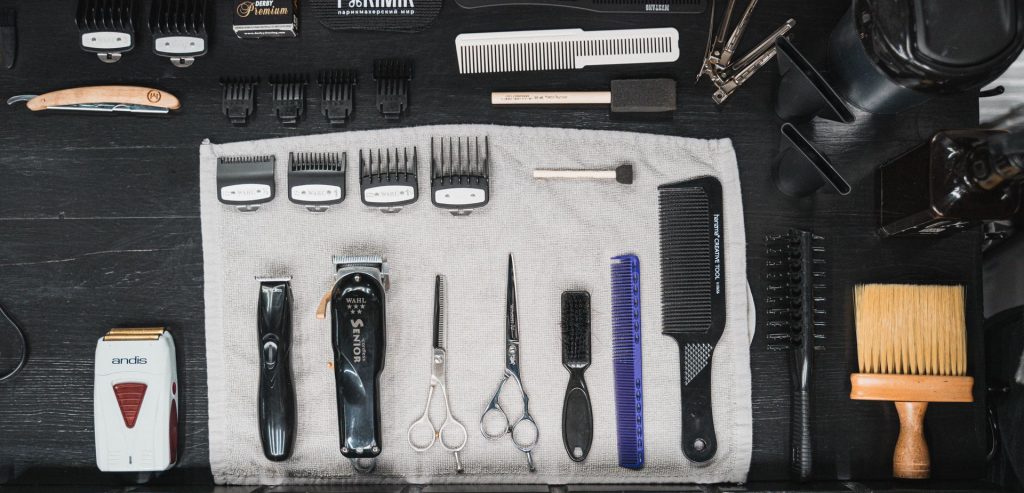
Disinfecting barbering tools isn’t a quick wipe with an alcohol pad between clients — it’s a specific procedure with different requirements depending on the tool. Scissors that only touch hair and a razor that can nick the skin call for fundamentally different levels of treatment, and mixing up those two approaches is the most common mistake found in barbershops that don’t give this topic dedicated attention. Let’s look at which disinfection method suits which tool, what steps proper treatment actually involves, which myths are worth dropping right away, and why the climate on the Costa Blanca forces a rethink of the usual schedule.
Which disinfection method suits which tool
Tools in a barbershop fall into two categories, and the line between them is contact with blood, not just with skin. Combs, clippers, and ordinary scissors touch hair and unbroken skin — for these, thorough chemical disinfection is enough: soaking in solution for the time the manufacturer specifies, usually at least 10 minutes, otherwise the active ingredients simply don’t have time to kill off pathogens.
Razors, blades, and any tool that could accidentally cut the skin fall into a different category. Even a minimal risk of blood contact calls for full sterilization in an autoclave at 120–140 degrees Celsius, not just a solution. Plenty of barbershops cut corners exactly on this distinction, treating blades the same way as combs — and this is the one point in the entire disinfection process where cutting corners genuinely isn’t an option.
There’s also some confusion around UV cabinets, which many clients mistake for a device that supposedly sterilizes tools. In reality, UV light doesn’t kill pathogens on a dirty or untreated surface — it only maintains the sterility of a tool that’s already been through the full treatment cycle, protecting it from dust and accidental contact until it’s used again. The blue light in a barbershop’s display case isn’t a substitute for disinfection; it’s the logical next step after it.
What steps proper treatment actually involves
The full treatment cycle for a tool that contacts skin or blood consists of four steps, and skipping any one of them reduces the effectiveness of all the others:
- soaking in disinfectant solution — removes most microorganisms and debris from the surface;
- rinsing and fully drying — skip this step and chemical residue can irritate the next client’s skin, while a damp surface sterilizes less effectively afterward;
- autoclave sterilization — for tools in the higher-risk category, this step is mandatory, not optional;
- storage in a UV cabinet — doesn’t replace the earlier steps, it only prevents an already-treated tool from getting contaminated again before it’s used.
Summer humidity on the Costa Blanca coast adds a practical wrinkle rarely mentioned in general disinfection guidelines: in high humidity, tools take noticeably longer to dry after rinsing, and that same damp environment favors microorganism growth between treatments. At The XY barbershop in Torrevieja, the interval between changing out disinfectant solution gets shortened during summer rather than relying only on the manufacturer’s official shelf life.
Disinfectant solution doesn’t work indefinitely even within its stated shelf life: as soon as it turns cloudy or visible particles build up in it, effectiveness drops regardless of how many days have passed since it was mixed. Visually checking the solution’s condition is a separate habit experienced barbers develop over time, and it doesn’t always line up with the date printed on the label.
The condition of the tool itself also affects how well treatment works, though this rarely gets mentioned on its own. Micro-cracks and nicks in blades, which show up over time even with careful use, create spaces solution physically can’t reach during soaking — the tool looks clean, but microorganisms can remain in the crack. That’s why regularly replacing blades and inspecting tools for damage is part of the same system as disinfection itself, not a separate equipment-maintenance task.
